
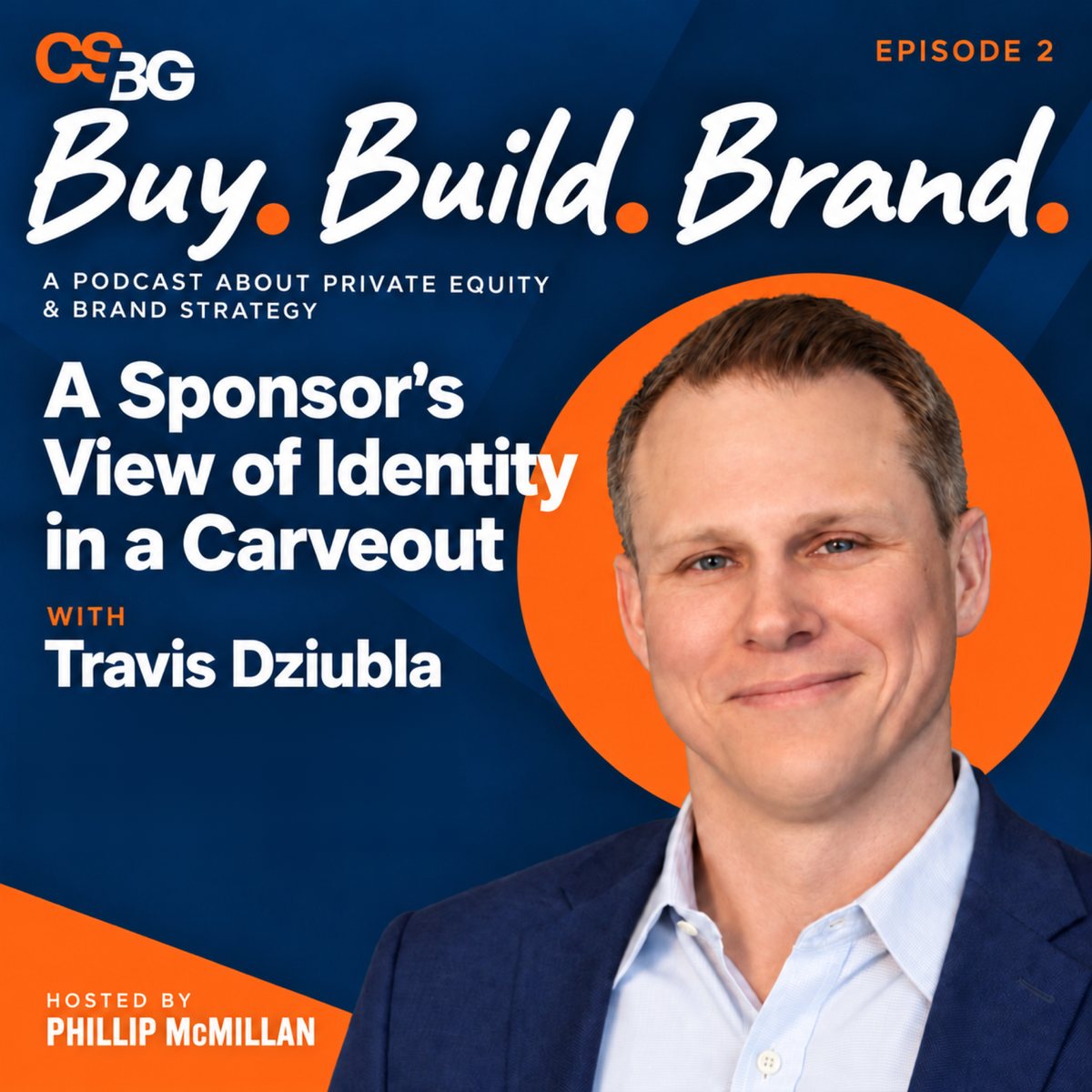
Episode 02 | Guest conversation
A Sponsor’s View of Identity in a Carve-Out
With Travis Dziubla, Managing Director, Pacific Avenue Capital Partners · Hosted by Phillip McMillan · 29:57







When a carve-out starts life as “Company Holdings LLC,” the first town hall gets awkward fast. Employees don’t know what they’re part of, customers don’t know who they’re doing business with, and competitors are happy to fill in the blanks.
Travis Dziubla, a Managing Director at Pacific Avenue Capital Partners, joins Phillip McMillan to explain why he treats identity as part of the carve-out plan from the start. He came up through submarine operations and plant turnarounds, and he admits he didn’t fully appreciate this work early in his career. Now he pushes for a name, a story, and a website before close.
In this episode
- What makes the first 90 to 100 days of a carve-out different from other deals, and why that window closes
- What “identity” covers in practice, from email addresses and a website to values and heritage
- Why a clear identity helps recruit executives into a newly standalone company
- What has to be ready on day one: at minimum, a name and a website customers can find
- Who belongs in the room: a core decision group of 3 to 6 people, with broader employee input
- How sponsors stay involved without taking ownership of the identity away from management
- His one piece of advice for deal teams before they sign
Chapters
- 00:00Introduction
- 02:12Travis’s path: submarine officer, McKinsey, Lion Equity, Pacific Avenue
- 03:48What makes carve-outs different in the first 90 days
- 05:31What identity means for a newly carved-out company
- 07:34What happens when you get it wrong
- 09:37Identity as a recruiting tool
- 14:25Why doing it earlier creates more value
- 16:17Identity work before close
- 18:24Getting executives and stakeholders to prioritize it
- 22:03Who should be at the table
- 24:10Balancing sponsor input with management ownership
- 26:16What every deal team should understand before they sign
Full transcript
Read the full transcript
Travis Dziubla (00:00)
If you get it wrong, it becomes very obvious. And you kind of alluded to it early on. The company feels like it’s in a holding pattern. You know, hey, we’re not entirely sure who we are yet. Just wait. That first town hall is really awkward if you’re named, you know, random company holdings LLC. You know, hey, we don’t really have an identity yet. We don’t know who we are, but we’re doing this carve-out.
Phillip McMillan (00:22)
That’s Travis Dziubla. He’s a carve-out operator at Pacific Avenue Capital Partners, and he came up on the plant floor, which means he arrived at this work skeptical of anything that sounded like soft work. When a business gets separated from its parent, the deal team usually has a clear plan for the TSAs, the systems, and the synergies. What it often doesn’t have is a plan for who the company is the day the parent name goes away. Travis makes the case that a carve-out is an identity problem before it’s an integration problem, explains why he now pushes naming before close instead of running as NewCo for a year, and gets specific about who belongs in the room and what gets lost when the sponsor is the loudest voice.
He also describes the short window during naming when a company’s culture is still malleable and what it takes to actually use it. This is the sponsor’s view of where identity fits in a carve-out playbook. I’m Phillip McMillan, managing director of CS Brand Group, and this is Buy. Build. Brand.
Phillip McMillan (01:37)
So we spent a lot of time talking about buy, build, brand. But in the case of a carve-out, in many cases it might be buy brand build. And today I’m excited to introduce Travis Dziubla from Pacific Avenue Capital Partners because not only have we had the chance to work together, but more importantly, he’s got over a decade of experience in operating carve-outs and taking them from start to finish. And so we’re really excited to learn from you today, Travis. Welcome to the show.
Travis Dziubla (02:02)
Yeah, looking forward to it. Looking forward to the conversation and carve-outs are such a fascinating application of private equity and investment. I’m excited to talk about the brand aspect of it.
Phillip McMillan (02:12)
I didn’t do you justice on building you up on your trajectory to get here, but I’d love for you to talk through how did you land in the world of carve-outs?
Travis Dziubla (02:21)
I ask myself all the time. So, Phillip, I actually started my career in the military. I was a submarine officer coming out of college and spent about a decade kind of doing operations in the submarine force. And I really loved that application of operations and strategy. So when I left the military, I joined McKinsey and ended up doing a bunch of power plant and chemical plant turnarounds. Everything from kind of operations strategy all the way to frontline execution. Spent six months at a coal plant in rural Illinois and spent plenty of time in boardrooms trying to work through what the strategy for the operations for the company going forward would be.
One of the things I got to work on was the Dow-DuPont merger. And that was a fascinating application of both merger and then subsequent carve-out. And that’s kind of where I got the bug for carve-out. So I joined a small PE fund based out of Denver called Lion Equity Capital Partners, and they had a very significant focus on kind of lower middle market, true lower middle market carve-outs. Small companies, great firm, they do great work. And I had the opportunity to really learn how to do carve-outs at a very small scale and learned a lot about you know forging an identity as a newly standalone business.
And then about two years ago, I joined Pacific Avenue Capital Partners—a larger fund, larger carve-outs, same application, same strategy. So looking forward to talking about my experience and how important that brand identity and that culture are to getting the carve-out right.
Phillip McMillan (03:48)
Yeah, and it sounds like, of course, you’re going to be talking today, not just about work you’ve done with Pacific Avenue, but more broadly across your set of experience. And it sounds like, you know, you’ve really seen from smaller organizations to larger organizations. I’d love to hear you talk through that first 90 days. I know there’s a million activities, but from an operator’s seat, what challenges are you faced with in a carve-out that are kind of unique to that transaction type?
Travis Dziubla (04:11)
Man, so in most carve-outs, you’re getting, you know, kind of a set of assets. You know, maybe it’s a plant and a product line, maybe it’s a sales team and a product line, but you’re definitely not getting a whole company. And so the first challenge we face in a carve-out is how do you build a business around what you’re acquiring? So there’s a good mix of kind of strategy and operations there. Flowing out of that though is how do you build the team you need?
You know, both the executive team as well as fill in some of the gaps, whether it’s back-office or supply chain operations, sales. How do you fill in the gaps in the team and do it quickly? Because every day that you’re missing that person is a day that you’re not executing on your value creation plan. But that third part is really important. Who are you going to be as a standalone company? Now there’s the very classic strategy aspect: what markets are we going to play in?
What products are we going to sell? Who are we going to sell them to? But there’s also that identity factor that you kind of alluded to. Who are we as a company? What are our new values as a standalone business? And that is not an insignificant part of the carve-out. I’ll admit it’s one that I probably didn’t fully appreciate early on in my career, but as I’ve moved forward, I’ve really come to see over and over again how important it is to set an identity and a direction for the business early in those first ninety days.
Otherwise there’s a good chance it’ll be set for you and that’s never the right answer.
Phillip McMillan (05:31)
So from my perspective, so much to unpack there, right? Because we’re talking about setting an identity early on. And I think it’s important in that we’re defining what you’re thinking about. Identity and brand are those words that kind of are nebulous and mean a lot of different things to a lot of different people. You know, in some funds, and I don’t think this is an exaggeration, it sounds like maybe you’ve even experienced this, they pick a name out of a hat, right?
It’s like, you know, company holdings LLC to get started and we’ll figure out the identity, whatever that means later. But when you think about identity, when you kind of think about that workstream that you mentioned you’ve shifted a little bit in thinking this needs to happen earlier, what are you really talking about and why is that important to the newly carved out entity?
Travis Dziubla (06:14)
Yeah. It goes from the very tactical, you know, website, logo, email addresses, like the very important day-to-day stuff, to the much larger, where do we come from? What is the heritage of the brand that we are choosing? What is the focus? Are we focusing on the products? Are we focusing on the customers? Are we focusing on the history of the division or the assets we’re acquiring? And if you don’t get that second part right, you know, the company doesn’t really have a clear direction for who they are.
And candidly you can lose some people along the way. So again, when I started my career, I was very focused on the very tactical part, right? We need a logo, we need a name, we need
Phillip McMillan (06:56)
Yeah.
Travis Dziubla (06:56)
A website, we need emails. I’ve come to appreciate over time that it’s important while you’re doing that, you have this opportunity to set who are we as a company, what are we focused on, what are our new values, and how are we going to operate in the market. And if you do that right, you know, the people in the organization, which always make up the foundation of the company, they have something to believe in. They have something to show up to work for, they have something to invest their time and attention in.
And that’s a really important part of it. So it goes from the very tactical to the slightly more nebulous, but I have come to be a big believer that both of those are actually really important to get right.
Phillip McMillan (07:34)
You talked a little bit about the people. You know, talk about some of the outcomes that you can drive. If you get this right, what does day one look like for the newly acquired team? Like how do they feel? What does that drive forward as far as outcomes for the business?
Travis Dziubla (07:50)
Yeah. Let me answer that question a little differently. If you get it wrong, it becomes very obvious. And you kind of alluded
Phillip McMillan (07:55)
Right.
Travis Dziubla (07:56)
To it early on. The company feels like it’s in a holding pattern. You know, hey, we’re not entirely sure who we are yet. Just wait. That first town hall is really awkward if you’re named, you know, random company holdings LLC. You know, hey, we don’t really have an identity yet. We don’t know who we are, but we’re doing this carve-out. Give us a little bit of time.
Phillip McMillan (08:15)
We’re going to figure it out.
Travis Dziubla (08:16)
We’ll figure it out. And
Phillip McMillan (08:16)
Yeah, yeah.
Travis Dziubla (08:17)
And look, you know, you can do that. People will show up to work, but that’s not really a resounding message. It’s also not clarity of purpose. And when they, you know, when the people walk out of the town hall, they’re not going to be able to pick up the phone, answer a customer, and say, we are X, we are this company, and we are proud to serve you. So if you do it right, you get a lot of momentum right out of the gate.
You know, people are excited by kind of the new identity of the business. They’re excited to invest their time and attention. You also get a lot of momentum from customers. It’s an opportunity to be able to explain to customers who we are, what we stand for, why our products are superior, why this carve-out is going to be beneficial for them. That customer communication is equally as important as the employee communication, and the competitor communication is important too, because I have seen instances where if you fail to kind of brand yourself, if you fail to forge that identity, the competition will be more than happy to forge it for you.
Phillip McMillan (09:16)
To create that narrative. Yep.
Travis Dziubla (09:16)
As you enter the market as a new company. So it’s really important from the town hall all the way to that first customer communication right afterward that you have something to speak to, that you have a story, that you have assets, you have logos and a narrative and a set of values so that you can drive forward with executing the carve-out with certainty.
Phillip McMillan (09:37)
You mentioned something earlier, having seen it both ways where you invested the time and effort to get this right versus maybe somewhere it was a little bit more happenstance or less planned out. The other thing that you talked about before is, you know, you’re going to acquire pieces of a management team, but there’s going to be in most cases pretty large gaps to fill. How important is it to have the identity in place as you’re building out the team?
Travis Dziubla (10:00)
Yeah. If you can get the team built before you close the deal, it’s actually really important as part of the process, part of the interview process for the folks you’re bringing on to talk about the identity you’re trying to build. If you’re hiring folks after close, which you know happens in a lot of cases, you’re talking about the newly forged identity, and it’s really important in both scenarios. That second one probably happens more frequently, and it’s the opportunity to kind of get that passion, get that new energy to the candidates and say, we’re not random company holding LLC.
We are this new business with this new identity, this new purpose. We have an origin story that is both recent but still being formed, and you have an opportunity, as a candidate, to be a part of it. That’s a really exciting story. I can’t tell you the number of executives I’ve talked to who are excited to be a part of a new journey because everyone loves building things, right? No
Phillip McMillan (10:55)
Yeah.
Travis Dziubla (10:55)
One enjoys being a caretaker. Everyone really enjoys building things. And so that identity, that brand, that narrative is important for attracting the best talent and giving them a chance to build something they can believe in.
Phillip McMillan (11:10)
Yeah, and in the absence of that, what happens like day one when a parent brand goes away? You talked earlier, I think very, you know, wisely about like the inverse of that is very problematic. What does that look like inside an organization when the parent brand goes away, they don’t have a clear identity in place? What does that day one look like internally?
Travis Dziubla (11:32)
Yeah. If you don’t have the identity in place, you get a lot of questions on kind of who are we and what are we doing, right? They know their day-to-day job. Everyone’s generally really competent and they’re kind of executing their responsibilities. What they don’t know is how to answer the questions they’re getting from their own employees,
Phillip McMillan (11:48)
Yeah.
Travis Dziubla (11:49)
From their customers, from new customers and old customers. You know, hey, what are you guys going to do with these products? What are you guys going to do with these services? Are you closing locations? Are you opening locations? We may not have answers to all those, but if we can answer who we are as a company, what we stand for, and what our strategy is, it gets a little easier to tell the customer, hey, hey, we don’t have it all figured out yet.
There are going to be communications to follow. But right now, we are this new company, we’re focused on delivering these products with exceptional service, and we’re looking forward to serving you as this new business. And so, if done correctly, it gives you an opportunity to go execute on some of the larger, meatier parts of the carve-out. If it’s missing, I would say it’s still very possible, but it is more challenging. And I mentioned kind of over the evolution of my carve-out career, I’ve come to appreciate that really having great brand, great assets, great logo, great story, those are things you can nail down before close.
And when you do, you’re coming out of the gate with you know clarity and momentum which would otherwise be lacking.
Phillip McMillan (12:51)
Yeah, I definitely want to kind of poke on that a little bit more. But before we do, you mentioned something around when you’re thinking about developing that brand and those communications and stuff that go out, I think one of the things that’s important too is there’s a lot of things, you know, we can put things in a press release, we can put things in formal communications to customers and everything. But you know, those employees are really the ambassadors and just the intangible things that aren’t said, you know, customers and employees can see apprehension versus excitement.
Travis Dziubla (13:20)
Mm-hmm.
Phillip McMillan (13:20)
Opportunity versus paranoia. Like there’s a big difference there and having the right story and identity that people actually believe in and in many cases even help to develop
Travis Dziubla (13:29)
Amen.
Phillip McMillan (13:30)
Separate from the parent brand, things that they had been dying to do that they just hadn’t been able to do because they were part of a larger conglomerate. Now all of a sudden you can put those real goal lines in front of them and they’re excited and that just carries over. It’s really contagious.
Travis Dziubla (13:43)
I think you hit the nail on the head. In most of the processes—and obviously we’ve worked together on a couple of them—we want to solicit employee input. This is often the first time that some of these employees have been asked, what kind of business do you want to build? What do you
Phillip McMillan (13:56)
Yeah.
Travis Dziubla (13:57)
Think about what you’ve built and you’ve spent your career
Phillip McMillan (13:59)
Yeah.
Travis Dziubla (13:59)
Developing? And that’s really powerful. And that’s kind of free momentum that you wouldn’t otherwise get. Don’t get me wrong, you can execute a carve-out, you know, without brand and assets and identity. It’s very possible. It certainly is not as powerful as having that clarity of purpose and that clarity of direction. And especially if you can engage the employee base in a way that makes them feel ownership for the company you’re building. Holy cow, that’s powerful.
Phillip McMillan (14:25)
Yeah, for sure. I mean, from your point of view as an operator, do you think that there is more value creation in doing that earlier versus waiting?
Travis Dziubla (14:39)
Absolutely. Yeah, because you know, if you talk to any private equity operator, but if you talk to carve-out operators especially, they will tell you those first hundred days are so important. You will work for years to build the company that you are trying to build and execute on the strategy and the value creation plan. But in those first hundred days, you have this opportunity. Everything’s very malleable, everything’s changing. People expect change. Over time that’s going to settle. And what you build early and what you set early, what you prioritize early is going to be the direction.
And it gets harder to change that. Not impossible, but harder to change that. And so those first hundred days for carve-out operators are so important. You have to choose what you’re focusing on. You have to be very clear on what you’re trying to execute on. And one of those for me is always going to be on forging that communication, the brand identity, the narrative, and the strategy. Because if you can get that nailed early on, you get a lot of momentum coming out of the hundred days and trying to change it later is challenging.
Certainly not impossible, but it is challenging.
Phillip McMillan (15:42)
I think that’s really smart. It’s almost like there’s a window of opportunity where change is just accepted, right? And the longer you let that go, the more resistant we are to change. It’s human nature, right? But there’s almost an expectation of change. And if you get that right out of the gate, then you’re pointed in the right direction, you’re heading the right way, and then it’s just minor adjustments from there. I think that’s really smart. Now you talked a little bit about you alluded to the fact that even prior to close.
There’s work to be done. Can you elaborate on that? I mean, I know that operationally that’s a loaded question, but kind
Phillip McMillan (16:14)
Of narrowing it down from an identity perspective.
Travis Dziubla (16:16)
Yeah.
Phillip McMillan (16:17)
What are you talking about there when you’re talking about like work prior to close? What’s really important to do in that window of time between kind of, you know, maybe not right at LOI, but you know, beyond that, as diligence is starting to come back, QoE looks strong. How do you start to put that together from an identity perspective, even before any announcements are made?
Travis Dziubla (16:36)
Yeah. It starts really early on, you know, hey, what are the assets we’re getting? What are the brands we’re getting? What are the products we’re getting? What are the locations we’re getting? That starts to form the foundation of the company that you’re acquiring. And there is a lot of fertile ground there for setting a brand, an identity, communication, and a narrative. And so early on we’ll start to understand kind of who are we? Are we industrial manufacturing? Are we a technology platform?
Are we a services business? What type of business are we? And what are the assets that are making up that business? As you get closer to close, and generally in that period immediately before close, it becomes really clear that on day one, you need a name and you need a website. Ideally, you need emails and brand assets that flow from that. But the most important thing is you need a name and a website because when you’re going out to customers and when you’re trying to convince them, hey, it’s going to be okay, we’ve got a plan, this is going to be great for you.
We’re going to be hyper-focused on you and your business, customer, in a way that maybe it wasn’t focused on under the parent company. You need to be able to talk about kind of what that business is, and you need to be able to direct them somewhere because as soon as you hang up the phone with them, they’re immediately going to Google you. And if they don’t have anything
Phillip McMillan (17:49)
Yeah.
Travis Dziubla (17:50)
To land on, it’s just not a great experience. Again, not existential, but it is lost opportunity. And so early on, we’ll try to learn kind of what’s the business we’re acquiring, and then we’ll challenge the team that is coming along, the team that we’re building before close, to come up with a name and an identity. And it’s a fairly elaborate process, as you are very well aware, and it’s a really important one to invest in. And so we’re obviously really involved, but at the end of the day, for most of our businesses, they get to choose.
It’s important that they be the ones to help forge that new identity.
Phillip McMillan (18:24)
In a lot of cases, you’ve got executives with a pretty long list pre-close and post-close, it’s even more overwhelming in a lot of cases. How do you convince them to prioritize some of this work alongside some of the other, you know, standing up things like IT and you know, operational systems and things like that? They’ve got a lot of moving pieces. How as an operator do you convince them that this is worth their time? And maybe even by extension, you know, not specific necessarily to your team at Pacific Avenue, but more broadly.
There are going to be operating partners that think this is a priority and operating partners that don’t, right? How do you kind of
Travis Dziubla (18:58)
Yeah.
Phillip McMillan (18:59)
How do you kind of close that gap and help them to appreciate the importance of this activity despite all of the other initiatives that the organization might be undertaking?
Travis Dziubla (19:08)
Yeah. I actually tend to have the opposite problem. I don’t have trouble convincing the executives to do this. I have trouble convincing the executives to do almost anything else aside from this. Like this is so important. This
Phillip McMillan (19:19)
This is the fun stuff, right? Yeah, yeah.
Travis Dziubla (19:21)
Well, and it’s so important. And so again, you know, good project management, making sure we’re prioritizing. Your team’s always great at making sure that we’re being very focused on the things that really matter and drive value. We can worry about the other stuff later, but like choosing a name, designing a logo, getting a website. Those three things really matter for day one. Once you have those, you can start crafting your communication strategy and your plan. And so you know, again, I don’t have a ton of trouble convincing executives this is important.
I do have to spend some time convincing everyone else, our partners, our internal team, how important this is. Again, this is not something we do to the exclusion of everything else, but it is important that we get the right stakeholders involved. So making sure that the board’s a part of this, making sure that we understand the investment company’s position, making sure that we’re thinking about an eventual exit. Again, we’re private equity, we eventually do sell. We need to be thoughtful on choosing an identity and a name that is going to carry us through to exit.
And so while there’s plenty of input from the private equity, there is plenty of input from the board. At the end of the day, it’s the company that’s often choosing kind of who they are and what they stand for going forward.
Phillip McMillan (20:28)
Yeah, that makes a lot of sense. And I think, you know, you’re right about the executives. I won’t say it’s every team, but many of them are excited about this because they, you know, not that they’ve been at all mismanaged, but in a lot of cases, if they’re being carved out, they haven’t been a focus for the parent in a while. And so they’re excited about the opportunity to tell their story. And this is the real opportunity to do that. And a lot of times they already have it.
It’s just getting it out. And one thing I would mention too: the name, the logo, the website are obviously critical, but you know as well as I do the amount of work behind the scenes to make that happen, right? You can’t just throw up a website. There actually has to be differentiated messaging, like we talked about, that’s pointing the organization in the right direction. And that’s where a lot of the heavy lifting is to get that right. And doing that amidst all these other operations initiatives and things like that, it’s a lot of work and there are a lot of sprints happening in a short period of time to make that happen.
Travis Dziubla (21:19)
Well, it’s one of the things I really like about working with CS Brand Group is you guys are very hyper-focused on executing the tactical, right? We need a website, we need a logo, we need a name, and we need some communication around all that. With all the other priorities going on, you know, I’ve worked with other firms that struggle with like, you know, really fluffy stuff, right? Like, okay, we don’t have to worry about that right now. Maybe important later, but we need kind of these three things.
We need to choose a name, we need to build a logo, we need to have a website, and it all needs to be done in the next thirty days. That’s a heck of a lift. And you guys do a great job of focusing the team on those real tactical, very important kind of operator 101 type things. And I think that’s an important part for making sure that we’re actually executing against what we need to and not getting lost in the weeds.
Phillip McMillan (22:03)
Yeah, it’s about efficiency, right? You get a limited portion of everyone’s attention. And I think during those sprints, and I think one thing that’s important, you know, from your perspective, we’ve kind of alluded to it. You talked a little bit about, you know, the investors and maybe some of the operations and investment teams, obviously the management team. But as you’re moving through this process, who should be at the table in your mind? Is it a large team, a huge committee? Is it a small and nimble team?
Like what have you found is the right balance for the decision makers and those providing input on this process as you start from, you know, basically pre-close all the way through standing the brand up in the market and making it public?
Travis Dziubla (22:46)
Yeah. That’s always one of the biggest challenges in this exercise is trying to make the team small enough that we can actually make decisions while having processes in place to be able to collect the input from the company. And so, while I won’t say this is the right way to do it, the way that has worked for me, you know, choose a core group of call it three to six people. You start to get to ten, you have too many decision makers.
Who within the company is going to be leading this going forward? Obviously, the CEO is important, you know, some of the C-suite, maybe the chief commercial officers. Really important. Maybe there’s a marketing director that’s really important. Maybe the plant leader or the union steward, someone that you know really understands the core of the workforce. You got to choose a good group of folks who can make a decision because the debate will kill a process in 30 days like this. So you got to be able to get a group together that’s small enough that they can kind of speak for the organization, collect feedback from the broader team, but make a decision and make it quickly.
Generally, as you well know, we have three or four meetings on this. In that second or third meeting, you’re going to be making decisions. If you don’t make decisions, you will not get this done in 30 days. In carve-outs, we’re going to be hyper-focused on that close deadline. You’ve got to make sure you have a small enough group that they can make decisions, but they can also speak for the organization and the stakeholders and collect feedback where appropriate.
Phillip McMillan (24:10)
In your experience along those lines, like you said something earlier, which I personally believe, and you know, it’s important that the management team’s DNA be all over this, right? You don’t want to do this as a sponsor in a vacuum. At the same time, you do have a thesis and you’re probably pointing the business in a slightly different direction than it was going, right? Whether it be expansion through acquisition or other markets, there’s a lot of things that you’ve put, you know, strategies you’ve put in place that the management team is aware of, but maybe still adjusting to because it’s such a rapid fire event as you move through this timeline.
How do you keep that balance as you go through this exercise of having the sponsor’s fingerprint on things, but letting the management team breathe and feel like it’s their own and the work is really theirs, something that they believe in?
Travis Dziubla (24:55)
Yeah. So we’re definitely involved in the process. So I mentioned kind of three to six people, you know, myself and you know the deal team, combined deal team will kind of be one of those folks. Generally we’ll do stakeholder interviews. You guys do great stakeholder interviews, and a couple of those stakeholder interviews are the sponsor, and so their voice is obviously heard and understood. But at the end of the day, you know, we’re hiring executive teams that we trust, who understand our strategy, who understand what we’re trying to do, and are fully aligned with it.
Now we may have differences of opinion of how to execute it and how to get there. But most of the time, the executive teams we’re working with, both the ones we bring along and the ones we put in place, are very capable, clearly understand the strategy, and are going to be good partners for us as we’re working through this. And so, you know, during a carve-out, I’m calling the CEO, the CEO’s calling me two, three, ten times a day. And so it’s not like the name’s going to surprise us, right?
We are there in the room, we’ll help make the decision. We had lots of conversations with the executive team and the committee kind of along the way. And so I would say it’s pretty rare that we go through these processes and we’re just misaligned with the management team. I actually can’t think of a time where that was the case. Most of the time, you know, the name and the identity, they speak to what we are trying to collectively build together.
Phillip McMillan (26:10)
Yeah, and there’s usually a lot of room in there for interpretation too, right? So much of that goes back to that story
Travis Dziubla (26:14)
Mm-hmm.
Phillip McMillan (26:16)
Of really what story are we telling? Does it fit the trajectory of the business, but also resonate with the legacy team? There’s room for that balance. A lot of that can be supported by the right narrative too, right? Where you can get everybody at the table on the same page just by thinking differently about some of the options. And that’s always a lot of fun to kind of go through that and see how it comes to life. Well, one last question for you as we go through this, as you think about all this work that you’ve done, kind of the experience that you’ve had across firms and with a lot of different organizations and standing up a new brand, what’s like the one thing that you want every deal team to understand before they sign about what to expect through this process?
Travis Dziubla (26:56)
Great question. I’m going to say where we started this conversation. You have a choice. You can choose to kind of punt this, and it’s often very attractive to punt it because especially in fast-moving carve-outs, you know, you may not have all the pieces in place yet. You may not have the whole team hired, you may not fully understand kind of what the value maximizing play in the market may be. It would be a lot easier if you could punt this six or nine months and make a decision when you had better information.
I would argue that’s not the right decision. You know, make the decision with the information you have before close. And so the advice I would give to anyone is, you know, with the team you have, with the information you have, choose an identity, choose a narrative, choose a set of assets, choose a logo, choose a name, and craft that communication package because it’s just so powerful. And if you kick the can down the road, you can certainly fix it later, you can try to create it later.
It is much more challenging. And I would argue you will not get the kind of result and momentum you want. So it has been wildly uncomfortable. Every time I’ve done it, it’s like I barely know this
Phillip McMillan (28:03)
Mm-hmm.
Travis Dziubla (28:03)
Company. I just started diligencing. Like I love the executive team I’m working with. I’ve known them for all of 35 days. Like, is this
Phillip McMillan (28:10)
Yeah.
Travis Dziubla (28:10)
Really the right time to be choosing a name and something as important as the identity of this business we’ve invested in? I have come to learn the answer is yes. Make the choice with the information you have, push it forward, you’ll get so much value out of it that there’s no question in my mind. Doing it before close is absolutely the right call.
Phillip McMillan (28:32)
That makes a lot of sense. And you have the experience to back that up, right? Seeing it both ways and being able to kind of add that perspective, I know, is really helpful for a lot of us. So Travis, thank you so much for taking the time today, man. This has been immensely insightful. When we post this episode, we’ll also be putting your LinkedIn information on there so that people can contact you. But in the interim, man, I really appreciate you taking the time today.
It was great catching up.
Travis Dziubla (28:54)
Thanks for having me on. I love this topic, it’s an important one.
Phillip McMillan (28:57)
All right, take care.
Phillip McMillan (28:59)
Thanks for listening to Buy. Build. Brand. If this episode was helpful, please subscribe on Apple Podcasts, Spotify, or wherever else you may listen so you don’t miss the next one. Also, a quick word on what we do here at CSBG. We work with private equity sponsors and their portfolio companies to keep the brand in step with the investment thesis. When the brand is right, the leadership team and the sponsor tell the same story. Sales teams win on value instead of price. Acquired companies become one company faster.
And when it’s time to sell, buyers can clearly see what you’ve built. Whether that means sharpening the message, repositioning the brand, or even naming a new platform, we help get you there. You’ll find us at csbg.co. I’m Phillip McMillan. Talk to you next time.
This transcript has been lightly edited for readability.
About the guest

Travis Dziubla
Managing Director, Pacific Avenue Capital Partners
Travis Dziubla is a Managing Director at Pacific Avenue Capital Partners. He began his career as a submarine officer, led power plant and chemical plant turnarounds at McKinsey, and worked on lower middle market carve-outs at Lion Equity Partners before joining Pacific Avenue.
More conversations
Keep listening.
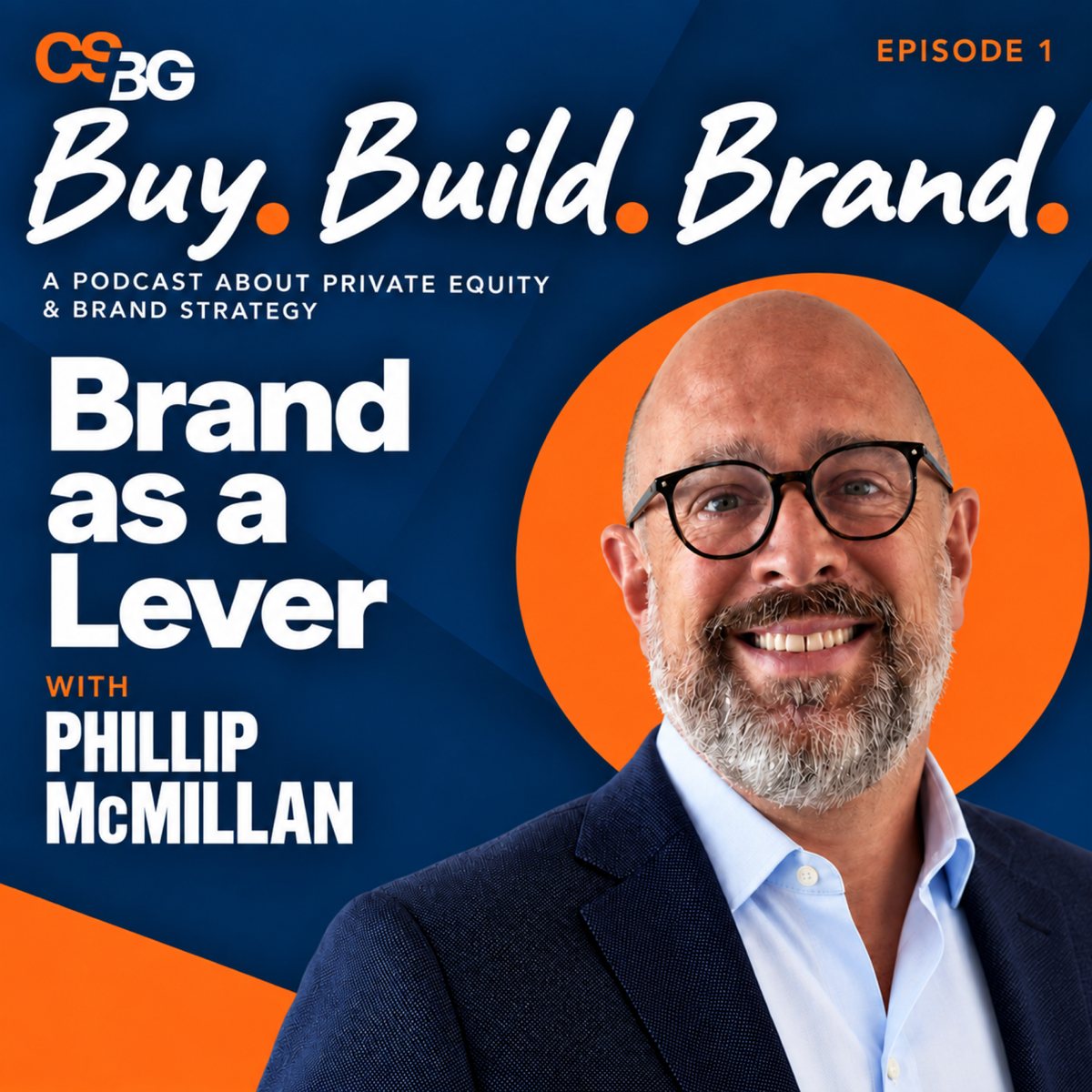
Episode 01 | Solo
Phillip McMillan
Founder and Managing Director, CS Brand Group
Phillip McMillan introduces the show and explores why brand belongs in the value creation conversation, from making an investment thesis clear to customers and employees to helping the next buyer understand the business.

Episode 03 | Guest conversation
John Pickerill
Chair, Advertising, Marketing & Trademark Law Group, Fredrikson & Byron
What should a buyer know about the name a business operates under? John Pickerill discusses registration uncertainty, pending marks, and the brand protection questions that belong in M&A diligence.
Keep the conversation going.
Follow Buy. Build. Brand. on your preferred podcast app for future episodes.